


Darwin’s theory of evolution: The success of cell therapy depends upon a correct understanding of Darwin’s theory of evolution. Restoration of the structures and functions of the human CNS is no exception. Regrettably,evolution is not generally known or acknowledged.
The key factor in cellular evolution is molecular evolution because the protein molecule is the building block of life. The 3 phases of evolution are reproduction, selection,and mutation. The first two phases are relatively controllable,whereas the third phase is not. Benign mutations generate useful proteins. Harmful mutations may result in resistant bacteria,viruses that are more toxic,and neoplasms (benign and malignant).
Cells of the ancient systems: Neural structures and functions of the human CNS are relatively immune to self-repair. This immunity developed during the almost 600 million years of animal evolution to protect the most important organs from growth of nerve cell neoplasms. Cell therapy was introduced to overcome this barrier. Primitive stem cells transplanted into human bodies may not grow into the right functional nerve cells but on the contrary can even cause further damage. Fully developed cells may have lost their potential for further evolving. Theoretically,cells in between these two extremes,such as progenitor nerve cells,are the rational choice. They retain sufficient potential to grow,but without the danger of going astray. However,their utility in cell therapy remains to be seen. Cells of the surviving ancient systems (olfactory,limbic,and reticular) in the human body are either good action cells or target cells for neural restoration. Olfactory ensheathing glial cells have been reported to have limited,but useful effects on restoration of neuronal function in humans. The reticular formation appears to have a superior functional recovery capacity compared to other systems.
1 Introduction Clinical translational science (CTS) is a newly emerging discipline[1]. In a broad sense,it could include any study that bridges the gap between bench (discovery in laboratories) and bedside (clinical applications). It excludes those projects funded by major pharmaceutical industries (PIs) with clear target products (mostly drugs) and markets in theory and in practice. Due to the vast range of products that CTS can deliver,its definition varies widely depending upon the final product the research delivers[2]. The science has won support from the National Institute of Health (NIH),although its cost effectiveness has been strongly challenged by politicians in the US House of Representatives (http: //blogs.nature.com/news/2012/03/nih-director-grilledover- translational-research-center.html)[3]. However, most medical professionals see the practical need for CTS. They are willing to use research grants to fill the gap in funding. In contrast to projects funded by the PIs that are product- and profit- or market-oriented, CTS research is largely patient- and population- or community-oriented.In parallel with projects funded by the PIs,the process of CTS research is also divided into four phases. The phases are labelled T1,T2,T3,and T4[4, 5] and intermingled with the four phases of clinical trials (Figure 1). It is not the purpose of this article to discuss these aspects in detail. Please refer to the relevant references mentioned above. They are listed at the end of the article.

|
| Figure 1 Comparing the four phases (Ⅰ–Ⅳ) of clinical trials with the four phases (T1–T4) of clinical translational science. |
It is worth noting that in the Wikipedia website (http://en.wikipedia.org/wiki/Translational_science), translational science (TS) is defined as a science that bridges the recalcitrant gaps that sometimes exist between fundamental science and applied science, necessitating a bridge to translate knowledge into applications. The word recalcitrant emphasises the challenge facing scientists. It implies that scientists working on TS need to acquire in-depth knowledge of life science to overcome difficulties before they can succeed. The word fundamental indicates that TS is not just about ordinary basic science but fundamental science. From this perspective,there is no science, other than Darwin’s theory of evolution (DE),that is more fundamental for life sciences[6]. As the famous US biologist Dobzhansky[7] pointed out in 1973, "Nothing in biology makes sense except in the light of evolution." Unfortunately,as the most famous evolutionist from Harvard,the late Dr Stephen J Gould in 2001 admitted,"the notion is not generally known or acknowledged" for various reasons[8]. The concept of the importance of evolution for clinical research and care is even more remote and alien to busy clinicians. Neuroscience requires firm attachment to the theory of evolution because the nervous system, particularly the human central nervous system (CNS) is the most highly evolved structure of life known to us in the universe. Its complexity,developed during the long journey of almost 600 million years of animal evolution,must be correctly understood in order to guide CTS research to success. It is the purpose of this article to draw clinicians’ attention to DE to guide their research and care of neurological disorders in the correct direction. Bearing this in mind,the author would like to focus on the starting point of the bridge: DE instead of its end,clinical research.
Apart from religious belief,the reason why DE is not generally known or acknowledged is probably lack of education to raise public awareness. Evolution is a painstakingly lengthy process. This is inconsistent with the mentality of the contemporary world,which is driven by competition to achieve success or profit in sectors such as business or finance as rapidly as possible. Scientists cannot be completely immune to this unhealthy culture. As a result,promises to cure neurological disorders have been repeatedly made,but these cures are yet to materialise. With the discovery of gene structure by Watson and Crick in 1953,we now know in theory and in principle how molecules of life interact with each other to drive the evolution of life forward[9]. DE is no longer a hypothesis. It is potentially calculable and many serious scientists and institutions around the world are working on such calculations with utmost patience.
A comprehensive understanding of evolution can only be achieved by studying molecule and DNA sequencing. This creates a massive mathematical problem. Serious scientists and institutions have bravely taken on evolutionary mathematics. Clinicians should not be scared away by the word mathematics. For them,there is no need to do any mathematical calculations. The simplest formula for permutations and combinations below are aimed only at explaining a concept. All medical professionals have learnt this basic mathematics during their secondary education. Once the concept is understood and accepted,they can orient their research in the correct direction and leave the calculations for the experts in bioinformatics. Although it will take many years,decades,or even centuries to achieve any meaningful positive results, some pioneering experts have started focussing their research in the right direction.
2 Personal background When I first became a young neurosurgeon,I expected to see many nerve cell-related brain tumours. Instead, I saw hundreds of gliomas,meningiomas,and other non-nerve cell tumours. Only two years later,did I encounter my first patient with a ganglioblastoma,a rare primitive nerve cell tumour[10]. Later,I worked in basic research developing a model of brain tumour in rats. This research was focussed solely on gliomas. I also worked on experimental spinal cord repair and found that axons sprouted only 1-2 mm in dogs, while in lower animals such as mice,axons could grow across the lesion. Puzzled by the above-mentioned odd observations,I began to ask myself the following questions:(1) Why do nerve cells of the CNS not grow into tumours easily?
(2) Why do only primitive nerve cells grow into tumours?
(3) Why does axonal re-growth vary between different animals?
(4) Why do neurons of the human CNS lack the ability to self-regenerate and self-repair?
Although I thought that evolution might have contributed to the difference,I began to understand the underlying mechanism in 1980 s when I became belatedly aware of the DNA structure discovered by Watson and Crick. The importance of evolution became particularly clear in 1990 when a large amount of data on molecular biology emerged. As a result,collecting, analysing and interpreting these data became a branch of life science known as Bioinformatics[11]. This branch of science exploded after the publication of the human genome by the International Human Genome Sequencing Consortium and Venter et al. in 2001[12, 13].
3 Molecular biology is in essence molecular evolution Why is evolution relevant to the restoration of structure and function of the human central nervous system and something that every scientist working in this area of research must understand? People accept that restoration of the structure and function of the human CNS is about molecular biology,but not many scientists realize that molecular biology is evolution in substance[14]. Hence,molecular evolution is probably a better term to describe the nature of the science. Evolution of life can be divided into six levels in ascending order: submolecular,molecular,cellular, organ,system and holistic. At the current level of development of life sciences,the key level is the molecular level,because only when evolution has created a protein molecule (the building block of life), does life begin and evolve. The disclosure of the entire secret of the evolution of proteins in the human body is an endless journey. This article can and will focus only on the basic principles of evolution of protein molecules. 3.1 Three phases of evolution As the level goes up,molecular evolution becomes more complex. However,the basic principles and sequences underlying all levels of evolution are the same: reproduction,selection and mutation[15].For an existing protein to develop into a new protein of a higher level,it has to reproduce itself to create the material for this process of evolution to go further. Reproduction develops exponentially and multiplies itself. Reproduction may not create identical molecules. Nature spots the tiny difference between these two seemingly identical twins. One must be weaker than the other,and the weaker one will degenerate or even die while the stronger one will survive and develop further. This process is known as the second stage of evolution: natural selection or survival of the fittest[6]. During further evolution, replication of DNA and RNA can lead to slightly modified sequences that represent novel variants of proteins due to errors. This stage,named mutation, is the most versatile and difficult to control in the laboratory and in living organisms with or without human intervention. The number of variants is so vast that we are far from knowing even a minority of them. As a result,mutations may go randomly either along a benign path into proteins a healthy organism needs,or in a hazardous way into bad proteins that constitute the structure of more resistant bacteria,more toxic viruses and a large variety of neoplasms[16].
On Earth,everything exists in,lives in,and interacts with the environment. Interaction of proteins takes place in a specific environment[11]. In the abovementioned three stages,a key process exists that makes everything happen. It is genomic material in the form of DNA or RNA. This is the blueprint that determines biological structures. It is replicated and passed on to offspring. When many proteins interact with each other,they create many more new proteins. This process continues and life at all levels evolves. In reality,it is not only proteins,but also all other molecules and ions that interact with each other. For simplicity,we use the protein as an example to cover all molecules because it is the core element of all living processes. In the simplest form,one protein that interacts with another protein may create a third protein of a new generation.
3.2 The mathematics of protein interaction This is the most important part of understanding the enormous complexity of protein interactions. Let us start from a simple example of arranging playing cards in various orders or sequences. Each card represents a protein. If there are three cards,A,K and Q,the number of combinations of all cards in a non-repetitive order or sequence is 3×2 = 6. The combinations of all cards are as follows: AKQ,AQK,KAQ,KQA,QAK, and QKA. These are all the combinations that these cards can produce. If the number of cards is increased to 4 (e.g.,A,K,Q and J),the maximum number of combinations will be much greater, i.e.,24. This is the following product: 4×3×2 = 24.AKQJ,AKJQ,AQKJ,AQJK,AJKQ,AJQK
KAQJ,KAJQ,KQAJ,KQJA,KJAQ,KJQA
QAKJ,QAJK,QKAJ,QKJA,QJAK,QJKA
JAKQ,JAQK,JKAQ,JKQA,JQAK,JQKA
The mathematical formula for calculating the number of permutations is:
n! = n(n - 1)(n - 2)…1.
Ten molecules are involved in the formation of the nervous system of the most studied organism in evolutionary science,the Drosophila,also known as the fruitfly[17]. In terms of permutations,the maximum number of non-repetitive combinations is:
10×9×8×7×6×5×4×3×2×1 = 3 628 800
(close to 4 million).
In 2000,the National Institute of General Medical Sciences,part of the NIH,launched the largest explicit molecular project of all time,aiming to solve the 3D structures of 10 000 known proteins[17]. The entire project was spread over 7 regions across the world. The scale of combinations would be astronomical if we were faced with such a massive number of proteins involved in an interaction. One may argue that there are limited numbers of proteins involved in the nervous system,and thus the actual number would be much smaller. This is true. Not all combinations always involve all molecules. However,logic would lead us to think that,being the most complex living organ known to us in the Universe,the human nervous system must be much more complex than that of a Drosophila that involves only 10 molecules. It is reasonable to assume that,in order to create all the proteins necessary to build the human CNS,the largest, instead of the smallest,number of interactions and combinations of proteins are involved. The above does not include the bases of the helix in the calculation. If the bases are included,the number of interactions is incalculable. This is exactly why it took 600 million years for the most primitive animal cell of amoeba to develop into the human race[19].
3.3 Complexity made simple With no sure success in sight after five decades of intensive and extensive research to combat malignant tumours,the biological scientific community began to realise that it may not be realistic to create effective medicines or treatments for all or the majority of cases. As any human being is a unique individual, almost no individual’s fingerprint is identical to that of another. This is how forensic medicine can be used to accurately convict a suspect. Targeting individual proteins would reduce the scale of the calculations drastically. The new policy to target individual genes is to create a new method of treatment known as "Precision Therapy" in the US[20] and "Personalised Treatment" in the UK[21]. Whether such an approach can be translated into repairing the human CNS is worth considering. In coordinating such an effort, Microsoft has already introduced its new global net-based program known as the Microsoft Cloud for individual gene sequencing. The essence of this program is to rally all computers around the world to work collectively by contract to do the analyses. 3.4 Two types of evolution Phylogeny can be determined by archaeological findings with carbon dating. In addition to this,there are theoretical methods in bioinformatics for calculation of the age of evolution. Proteins must go through the phase of mutation to create a variety of new proteins. There are two hypotheses about mutation: adaptive evolution and neutral protein evolution. Obviously,it is not the task of this article to describe them in detail. This article gives only a brief introduction to both of them,particularly the latter,in order to provide an understanding of the relation between evolution and the repair of the human CNS. Adaptive evolution is classical Darwinism. Its principle is "The fittest survives". It is also known as natural selection. In the 1960s, a Japanese biologist named Motoo Kimura introduced a new hypothesis[22]. He performed calculations with gene data and found that ribosomes did not have the tendency to adapt to their environment. Ribosome substitution is random (independent from the environment) and unbiased,hence the name, "neutral hypothesis". According to this hypothesis, ribosome substitution progresses with a constant speed. Thus,it is possible to calculate the pace of development of proteins. The mechanism that dictates the pace is known as the "molecular clock". It is assumed that it takes around 1 000 years for a new protein to develop.The estimate of 600 million years of animal evolution is more or less accurate because it is based on archaeological findings and carbon dating rather than theoretical calculation. If the theoretical estimation of 1 000 years for a new protein to emerge is also relatively accurate,then in 600 million years,600 000 new proteins should have been produced. The 10 000 proteins of the NIH is investigating are only 1/60 of the estimated total number of proteins[16]. We do not know whether the neutral hypothesis is accurate,but at least we can assume that a large number of new proteins and molecules remain to be investigated.
Since the discovery of gene structure and the human genome,evolution is no longer a philosophy or a hypothesis. It has become a theory that is moving towards a precision science that needs further development and perfection. It can offer guidance for basic research and clinical practice. Now,it is possible to investigate and calculate the pace of evolution based on the number and nature of protein-protein interactions (PPIs). This newly emerging discipline is known as PPI network analysis,and it has become the most rapidly evolving branch of bioinformatics[23]. Although we know the principles of PPI network analysis,only a very small proportion of the supra-astronomical number of individual PPIs are known. It would be very optimistic to assume that all PPIs can be fully unfolded in the space of a century. Only then will we be able to intervene and manipulate efficiently the process of molecular evolution and produce all the proteins and interactions that are needed to successfully repair the damaged CNS. We are not there yet!
4 Clinical consideration of neural restoration with cell therapy There are four ways to restore the structure or functions of the CNS.(1) Mother nature can accomplish the mission by itself. This is natural recovery,and various forms of nervous damage have their own natural histories.
(2) Pharmaceutical methods.
(3) Physical therapy including acupuncture.
(4) Cell therapy.
All these processes and methods,if successful,are the result of optimal protein evolution. This means either creating the proteins needed for restoration or influencing other molecules and factors to make still surviving proteins function properly (wake up from hibernation). Natural recovery,pharmaceutical and physical methods are not topics of this article and hence,only cell therapy is discussed below. While the fact that it took 600 million years to develop the whole spectrum of proteins needed in human evolution must be respected,it is by no means to say that we need to repeat the entire lengthy process to create these proteins and mechanisms in cell therapy[24]. These proteins and mechanisms are available somewhere in a healthy living body (from embryo to adult body) or cell,but missing at the lesion site or somewhere in the middle of the process of repair. The long-term ultimate solution is to fully understand and deliver the proteins to the lesion site. However,there could also be a reasonable chance of success if the necessary proteins are delivered to the lesion site to trigger a chain reaction and lead them to restoration of some structures or functions. The current state of limited success in functional recovery of spinal cord injury after olfactory ensheathing cell transplantation (OECT) is probably the result of such chain reactions. The advantage of using cells probably lies in the fact that this method provides the lesion site with an environment of many necessary molecules instead of a single or limited few.
A phylogenetic gap exists not only between lower and higher animals at a holistic level,but also between cells,organs,and systems of an individual living body. Some cells,organs,and systems developed earlier than others did. Obviously,the ancient cells, organs,systems,or animals involve fewer and less sophisticated proteins,and have fewer interactions and mechanisms underlying their interactions. Hence, these entities are easier to repair and it is easier for them to self-repair. An obvious example of self-repair is that,if an earthworm is cut at its posterior half near its tail,the remaining part may survive,and the cut-off portion may re-grow. The ancient cells,organs,and systems,also have the special feature of being deeply located and widely inter-connected. Therefore,these cells,organs,and systems are less likely to be completely destroyed by an external impact[25].
4.1 The most ancient structures of the human brain According to archaeological findings,the most ancient parts of the CNS are the following[26]:(1) Olfactory System;
(2) Limbic System;
(3) Reticular Formation (RF).
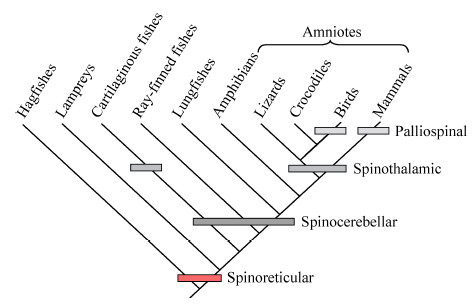
Figure 2 illustrates the comparative development of various systems of the animal CNS[27]. The RF is at the bottom of the phylogenetic ladder.
|
| Figure 2 Phylogenetic ladder and sequence of development of various parts of the human central nervous system (Courtesy of Striedter, GF. "Principles of Brain Evolution." Sinasaur Associates. Inc, Publishers. Sunderland, Massachusetts USA. 2005. pp 436). |
There are two structural aspects of neural restoration through cell therapy: the repairing cells and the cells to be repaired. Both follow the principle of evolution. Not only do ancient cells have stronger potential to repair neural damage but they are also easier to repair when damaged. Of the above three ancient structures, the former two have more potential to repair whilst the last one has more potential for being repaired.
Extensive animal experiments and limited clinical observations and trials have shown that the olfactory system has the potential to promote axonal regeneration with some structural and functional recoveries[28, 29, 30, 31, 32, 33, 34]. The limbic system has similar functions,but reports are sketchy[35].
The RF is an extremely versatile system that is dubbed as "the command centre of the CNS"[26, 36]. Its more than trillions of interneuron connections (neuritis and synapses) have made its complete destruction almost impossible. There is a high chance that there are some interneurons that survive damage and can reorganise CNS circuitry in alternative routes of connection. This is known as neural plasticity through collateral sprouting[37, 38, 39, 40, 41]. This differs from axonal regeneration of the original damaged neurons in that the sprouting is collateral instead of terminal. Neural plasticity makes important contributions to functional recovery when axonal regeneration fails.
4.2 Choice of cells for therapy A wide range of cells,from primitive stem cells to adult nerve cells,has been tested in the context of restoration of neural structures and functions in both laboratories and at the bedside. Regarding the potential for growth,the more primitive the cells,the more potential they have,not only to grow,but to grow into various cells. However,the direction of growth is hard to control with these cells at the stage of mutation. On the other hand,if we choose the fully-grown cell, it may have completely lost the ability to grow. Therefore,the best option must be somewhere between the two extremes. From the perspective of function,neurons are chosen for repair of the cell body (grey matter),whilst glial cells (white matter) are chosen for repair of the processes (white matter). In both laboratories and patients,glial cells tend to outgrow neurons. In order to isolate individual cells,differentiation techniques are necessary[42].If any cell therapy is to succeed,the transplanted cells must meet the following two basic criteria, namely:
(1) They must have the potential to stimulate growth of nerve cells and/or their processes. The primitive (toti-,pluri- and multi-potent) stem cells meet this first criteria.
(2) There must be an assurance that the cells will not grow into other unwanted cells. Unwanted cells may not repair the damaged nerve tissues,but instead destroy normal structures. The primitive (toti-,pluriand multi-potent) stem cells do not offer this assurance. They may overgrow or grow in various uncontrolled directions and lead to proliferation,neoplasms,or even malignancies. At least one case of a devastating outcome has been made public at the 43rd Annual Meeting of the International Spinal Cord Society in Athens in 2004. A Canadian paraplegic girl 16 years of age went to another country and received an intrathecal injection of primitive stem cells. Nine months later,her level of paralysis rose to cervical, with more severe paralysis. Surgical exploration demonstrated proliferation of astrocytes over the entire back surface of her spinal cord up to mid-cervical region. Oligo- and uni-potent neural stem cells are different. They can safely grow into a certain type or types of healthy nerve cells under normal conditions. These cells are also known as progenitor cells.
Molecular evolution has never been a tournament involving a number of athletes running strictly within a number of lanes. It is based not only on many molecules and ligands but,more importantly,on the astronomically more numerous interactions between them. They cross lanes. Discovery of a few molecules and ligands is only the first step in a long march. Full understanding of its implications must involve all interactions. It is an extremely complex dynamic process instead of a static one[15].
There is no more important interaction in the development of the nervous system than that between glial cells and neurons. Such interactions remain active in the olfactory system of the adult human brain and facilitate the regeneration of neurons. The nervous system develops from the epithelium of the neural tube. The fact that the olfactory ensheathing cells (OEC) are found in a similar location suggests its continuous role in growth and repair of neurons after birth. The full line-up of all types of glial cells (astrocytes, oligodendrocytes,ependymocytes,and microglia) within the system may contribute to its unique potential for regeneration through a large variety of interactions between neurons and glial cells and between various glial cells[43]. This may suggest the possibility that adding more cells of one type or another may enhance outcomes[44]. Of course,substantiation of this would require more in vitro and in vivo tests. One of the key factors in cell-cell interaction is the ligand[45]. Ligands are small molecules or ions. They work as the key to open ion channels to make interactions happen.
The CNS makes the human race unique and superior to other animals,including primates. In the long journey of phylogenetic evolution,the human CNS could survive only if molecular evolution worked in favour of protecting it from tumours and other invaders. The trade-off of such favour is the loss of the ability to self-regenerate and self-repair. Not all human cells have the same ability to repair. This specific ability depends upon their phylogenetic age; i.e.,the time at which the tissue appeared in the process of evolution. It is impossible to lose a limb and then fully re-grow the limb,and at the same time to remain a human being. A human being can only choose one side of the coin,not both.
4.3 About Walk and Cure Some publications use the words Walk and/or Cure to draw public attention to the success of the treatment of paraplegics. The term "walk" concerns somatomotor function,the latest function to develop in phylogeny. Without strictly defining exactly what the term walk means in a specific situation,the word may lead to impossibly high expectations that a complete paraplegic can walk almost normally. This has never happened. Kmietowicz reported in 2014 about a patient of T7 complete spinal cord injury (SCI) who could walk after olfactory ensheathing cell transplantation (OECT)[46]. This was definitely a success,but judging superficially from a related video,the word walk might not describe the exact actions of the patient. Because the patient needed a frame,we can infer that he could hardly stand securely on one leg,the basic requirement for walk. That the frame is fitted with wheels means that he did not possess enough energy in legs to walk and relied on the momentum of movement of the trunk to push himself forward by rolling the wheels.The term "cure" sounds even more miraculous. It is more often used in media. A recent online scientific report by DeArmond of a US charity in 2012 (http://www.spinalcord.org/breakthrough-opens-doorto- cure-complete-sci/) used the word Cure in its title. However,the original scientific article does not contain such a word[47]. It is desirable for scientific publications that the author(s) use accurate scientific terms like functional recovery and elaborate its details. Otherwise,we may reduce our serious science to business or media in the form of propaganda. This can undermine the integrity of our science.
An independently verified case of success of OECT was reported by Guest,Herrera and Qian in 2006 in the official journal of the International Spinal Cord Society[48]. According to the personal observations of the author of this article,there are important functional recoveries after OECT that do not reach statistical significance. Some minor improvements that are not statistically significant contribute much to the quality of daily life. I have seen dozens of such patients. Herein,I give two examples to illustrate what we should or can expect:
Example 1This is a male patient of spinal cord injury (SCI) C5 of American Spinal Injury Association Impairment Scale (AIS) A with a zone of partial preservation (ZPP) of 2 points at C6 level in both hands. He was keen to drink mouthful from a bottle instead of a straw, but could not hold a half-full small plastic bottle of water. He needed a carer who was paid $250.00 a day to look after him. I wonder if the patient exaggerated his carer’s service charge. After OECT,the C6 motor function improved from 2 to 3 points. Due to this increase of motor power of the wrist extensors from non-functional to functional,his wrist could extend against gravity. This in turn brought the finger flexors passively into play due to tension of tendons. Now,with slight flexion of the fingers,he could hold the bottle with both hands and drink by himself. I confirmed his performance. He no longer needs a carer to help him drink.
Example 2The second example is a male patient of SCI T2 AIS A with a ZPP of sensation at T2-T3. A few days after OECT,the sensory level dropped to T4. The patient was satisfied with this minor and seemingly insignificant recovery. I confronted him about his almost negligible benefit. He was unhappy with my comment and said,"No,I am very satisfied. With this minor improvement,now I can breathe much more easily, freely and comfortably".
The experiences relating to OECT tells us that the Law of All (cure) or Nothing does not apply to cell therapy. People should accept minor but useful improvement of functions as a success. Sometimes, even when the patients are satisfied,scientists remain unhappy because they do not see statistically significant differences on paper. With such obvious patient satisfaction in mind,dogmatic statistical analyses may need some redesigning for these specific cases of subtle improvements. We are under pressure to create miracles. However,serious scientists should educate themselves in the first place and then educate the public,media and politicians to be patient in the light of evolution. Reports,including news reports, have to be done responsibly and based strictly on facts without exaggeration or ambiguity. Neuroscience of the CNS is a sophisticated science studying an organ,which took 600 million years to develop since the first appearance of an animal cell. It cannot be compared to any other life sciences and technologies that are millions or billions of years younger on the ladder of life evolution. Wishful thinking kills!
In conclusion,I would like to cite the comment of a director of a famous charity who was himself a tetraplegic. He challenged me by saying,"How incompetent you medical professionals are! Space scientists have already sent stations into space,but you cannot even resolve our problems on earth!" Such grievance is understandable but it is exactly the result of ignorance about evolution. Materials used in a space station are mostly inorganic that have existed since early days of the Earth. Human beings are a trillion times more complex!
| [1] | Feldman AM. CTS: a new discipline to catalyze the transfer of information. Clin Transl Sci 2008, 1: 1-2. |
| Click to display the text | |
| [2] | Rubio DM, Schoenbaum EE, Lee LS, Schteingart DE, Marantz PR, Anderson KE, Platt LD, Baez A, Esposito K. Defining translational research: Implications for training. Acad Med 2010, 85: 470-475. |
| Click to display the text | |
| [3] | Westfall JM, Mold J, Fagnan L. Practice-based research — “Blue Highways” on the NIH roadmap. JAMA 2007, 297: 403-406. |
| Click to display the text | |
| [4] | Elias A. Zerhouni. Translational and clinical science—time for a new vision. NEJM 2005, 353. |
| Click to display the text | |
| [5] | Trochim W, Kane C, Graham MJ, Pincus HA. Evaluating translational research: A process marker model. Clin Trans Sci 2011, 4: 153-162. |
| Click to display the text | |
| [6] | Darwin C. The Origin of Species. John Murray, London, 1859. |
| [7] | Dobzhansky T. Nothing in biology makes sense except in the light of evolution. American Biology Teacher 1973, 125-129. |
| Click to display the text | |
| [8] | Gould SJ. Introduction. In: Evolution—The Triumph of an Era. Zimmer C. William Heinenmann, 2001, London, ix-xiv. |
| [9] | Watson JD, Crick HFC. Molecular structure of deoxypentose nucleic acids. Nature 1953, 171: 737-738. |
| Click to display the text | |
| [10] | Tatter BS. The new WHO Classification of Tumors affecting the Central Nervous System (1993). http://neurosurgery.mgh.harvard.edu/newwhobt.htm. |
| Click to display the text | |
| [11] | Orengo CA, Jones DT, Thornton. Bioinoformatics, Genes, Proteins and Computers. Oxford: BIOS Publishers Ltd., 2003. |
| Click to display the text | |
| [12] | International Human Genome Sequencing Consortium. Initial sequencing and analysis of the human genome. Nature 2001, 409: 860-921. |
| Click to display the text | |
| [13] | Venter JC, Adams MD, Myers EW, Li PW, Mural et al. The sequence of the human genome. Science 2001, 291: 1304-1351. |
| Click to display the text | |
| [14] | Page RDM, Holmes EC. Molecular Evolution — A Phylogenetic Approach. Blackwell Publishing. Malden, Oxford, Victoria 1998, pp 346. |
| Click to display the text | |
| [15] | Nowak MA. Evolutionary Dynamics. Harvard University Press Cambridge MC, London, 2006, pp 363. |
| Click to display the text | |
| [16] | Levi-Montalcini R, Hamburger V. Selective growth stimulating effects of mouse sarcoma on the sensory and sympathetic nervous system of the chick embryo. J Exp Zool 1951, 116: 321-361. |
| Click to display the text | |
| [17] | Levitan IB, Kaczmarek (editors and authors). Chapter 16: Neuronal Growth and Trophic Factors. In: The Neuron Cell and Molecular Biology 3rd edn. Oxford University Press: Oxford, New York 2002, pp 395-433. |
| [18] | Tanford C, Reynold J. Introduction. In: Nature's Robots — A History of Proteins. Oxford University Press. Oxford, New York 2001, pp 1-7. |
| [19] | Zimmer C. Evolution—The Triumph of an Era. William Heinenmann, London, 2001, pp70-71. |
| [20] | Collins FS and Varmus H. A new initiative on precision medicine. N Engl J Med 2015, 372:793-795. |
| Click to display the text | |
| [21] | Garnett MJ, Edelman EJ, Heidorn SJ, Greenman CD, Dastur A, Lau KW. Systematic identification of genomic markers of drug sensitivity in cancer cells. Nature 2012, 483(7391): 570-575. |
| Click to display the text | |
| [22] | Kimura M. Evolutionary rate at the molecular level. Nature 1968, 217: 624-626. |
| Click to display the text | |
| [23] | Zhang A. Protein Interaction Networks—Computational Analysis. Cambridge University Press, 2009. |
| Click to display the text | |
| [24] | Fawcett J. Repair of spinal cord injuries: Where are we, where are we going? Spinal cord 2002; 40: 615-623. |
| Click to display the text | |
| [25] | Steeves JD, Tetzlaff W. Strategies for spinal cord repair.In: Neurobiology of Spinal Cord Injury. Kalb RG, Strittmatter SM (Editors). Humana Press. Totowa New Jersey, 2000. pp 113-130. |
| Click to display the text | |
| [26] | Patetas MA, Gartner LP. Chapter 14, Reticular formation. In: A Textbook of Neuroanatomy. Blackwell Science Ltd. Oxford, 2006, pp 241-252. |
| [27] | Striedter GF. Principles of Brain Evolution. Sinasaur Associates. Inc, Publishers. Sunderland, Massachusetts USA. 2005, pp 436. |
| [28] | Li Y, Rasiman G. Repair of adult rat corticospinal tract by transplant of olfactory ensheathing cells. Science 1997, 277: 2000-2002. |
| Click to display the text | |
| [29] | Li Y, Field PM, Rasiman G. Regeneration of adult rat corticospinal axons induced by transplanted olfactory ensheathing cells. J Neurosci 1998, 18:10514-10524. |
| Click to display the text | |
| [30] | Ramόn-Cueto A, Valverde F. Olfactory bulb ensheathing glia: A unique cell type with axonal growth-promoting properties. Glia 1985, 14:163-173. |
| Click to display the text | |
| [31] | Ramόn-Cueto A, Plant GW, Avila J, Bunge MB. Long distance axonal regeneration in the transacted adult rat spinal cord is promoted by olfactory ensheathing glia transplants. J Neurosci 1998, 18: 3803-3815. |
| Click to display the text | |
| [32] | Huang H. Experimental studies on the promotion of nerve regeneration and functional recovery after contusion of spinal cord with olfactory ensheathing cell transplantation. Scientific Reports of Chinese Naval Hospital 2001, 14: 65-67. (in Chinese) |
| Click to display the text | |
| [33] | Huang H. Preliminary report on the results of clinical trial of olfactory ensheathing cell transplantation in the treatment of spinal cord injury. Scientific Reports of Chinese Naval Hospital 2002, 15:18-21. (in Chinese) |
| Click to display the text | |
| [34] | Bartolomei JC, Greer CA. Cell therapy for spinal cord repair. In: Neurobiology of Spinal Cord Injury. Kalb RG, Strittmatter SM (Editors). Humana Press. Totowa, New Jersey, 2000, pp 195-214. |
| Click to display the text | |
| [35] | Keller F, Levitt P. Developmental and regeneration-associated regulation of the limbic system associated membrane protein in explant cultures of the rat brain. Neuroscience 1989, 28: 455-474. |
| Click to display the text | |
| [36] | Wang D. Reticular formation and spinal cord injury. Spinal Cord 2009, 47: 204-212. |
| Click to display the text | |
| [37] | Raisman G. Neuronal plasticity in the septal nuclei of the adult rat. Brain Res 1969, 14: 25-48. |
| Click to display the text | |
| [38] | Liu CN, Chambers WW. Intraspinal sprouting of dorsal root axons. Arch Neurol Psychiat 1958, 79: 46-61. |
| Click to display the text | |
| [39] | Hebb DO, Penfield W. Human behaviour after extensive bilateral removal from the frontal lobes. Archives of Neurology and Psychiatry 1940, 44: 421-436. |
| Click to display the text | |
| [40] | Konorski J. Conditioned Reflexes and Neuron Organization. Cambridge University Press. 1948, 89. |
| Click to display the text | |
| [41] | Wang D, Sun T. Neural plasticity and functional recovery of human central nervous system with special reference to spinal cord injury. Spinal Cord 2011, 49: 486-492. |
| Click to display the text | |
| [42] | Trujillo CA, Schwindt TT, Martins AH, Alves JM, Mello LE, Ulrich H. Novel perspectives of neural stem cell differentiation: from neurotransmitters to therapeutics. Cytometry A 2009, 75: 38-53. |
| Click to display the text | |
| [43] | Waxman SG, Kocsis JD. Experimental approaches to restoration of function of ascending and descending axons in spinal cord injury. In: Neurobiology of Spinal Cord Injury. Kalb RB, Strittmatter SM (eds.). Humana Press, Totowa, New Jersey. 2000, pp 215-239. |
| [44] | Sun T, Ye C, Zhang Z, Wu J, Huang H. Cotransplantation of olfactory ensheathing cells and Schwann cells combined with treadmill training promotes functional recovery in rats with contused spinal cords. Cell Transplant 2013, 22 Suppl 1: S27-38. |
| Click to display the text | |
| [45] | Yick LW, So KF, Cheung PT, Wu WT. Lithium Chloride Reinforces the regeneration-promoting effect of chondroitinase ABC on rubrospinal neurons after spinal cord injury. J Neurotrauma 2004, 21: 932-943. |
| Click to display the text | |
| [46] | Kmietowicz Z. Paralysed man walks again after cell transplantation. BMJ 2014, 21: 349. |
| Click to display the text | |
| [47] | Dulin JN, Lu P. Bridging the injured spinal cord with neural stem cells. Neural Regen Res 2014, 9: 229-231. |
| Click to display the text | |
| [48] | Guest J, Herrera LP, Qian T. Case report: Rapid recovery of segmental neurological function in a tetraplegic patient following transplantation of fetal olfactory bulb-derived cells. Spinal Cord 2006, 44: 135-142. |
| Click to display the text |