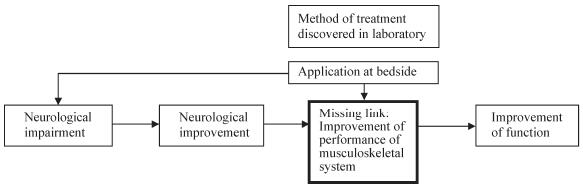
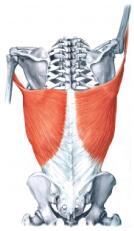
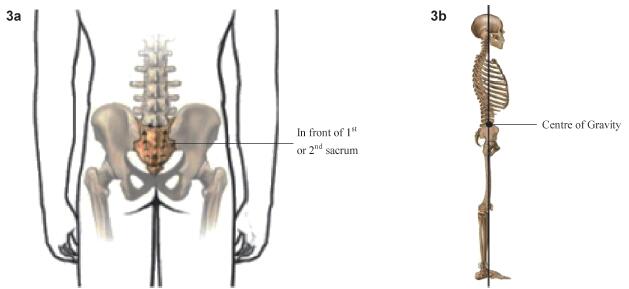
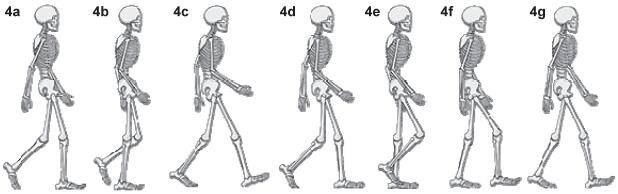
摘要 Without an understanding of functional musculoskeletal system recovery, the translation of knowledge concerning neurological recovery from laboratory discoveries to bedside applications will be incomplete. Because improvements in neurological function after cell transplantation are minor and can be easily ignored, this article draws attention to the minimal improvements required to allow a spinal cord injury patient or person to live a relatively independent life. These minimal improvements include (1) the key muscle power required for trunk stability; (2) the key muscle power required to allow a paraplegic to walk; and (3) the key muscle power required for hand usefulness or functionality. The system of muscle power grading promoted by the British Medical Research Council (MRC) is more sensitive and delicate than the ASIA Standards, as the latter only accept the full range of movement of a joint. The MRC system seems to be preferable to the ASIA Standards in clinical trials of cell transplantation, wherein minute improvements in function might result in large differences in the quality of life. The threshold of function is a grade 3 power level. Even if all relevant muscles fail to achieve a power higher than grade 3, the patient can be minimally functional and hence relatively independent. These relevant muscles include the latissimus dorsi, hip flexors, hip abductors, shoulder abductors and flexors, elbow flexors and extensors, and wrist extensors. These muscles are innervated by the C5-7 spinal cord segments except the latissimus dorsi, for which innervation extends to C8.
Abstract: Without an understanding of functional musculoskeletal system recovery, the translation of knowledge concerning neurological recovery from laboratory discoveries to bedside applications will be incomplete. Because improvements in neurological function after cell transplantation are minor and can be easily ignored, this article draws attention to the minimal improvements required to allow a spinal cord injury patient or person to live a relatively independent life. These minimal improvements include (1) the key muscle power required for trunk stability; (2) the key muscle power required to allow a paraplegic to walk; and (3) the key muscle power required for hand usefulness or functionality. The system of muscle power grading promoted by the British Medical Research Council (MRC) is more sensitive and delicate than the ASIA Standards, as the latter only accept the full range of movement of a joint. The MRC system seems to be preferable to the ASIA Standards in clinical trials of cell transplantation, wherein minute improvements in function might result in large differences in the quality of life. The threshold of function is a grade 3 power level. Even if all relevant muscles fail to achieve a power higher than grade 3, the patient can be minimally functional and hence relatively independent. These relevant muscles include the latissimus dorsi, hip flexors, hip abductors, shoulder abductors and flexors, elbow flexors and extensors, and wrist extensors. These muscles are innervated by the C5-7 spinal cord segments except the latissimus dorsi, for which innervation extends to C8.
Dajue Wang. Why does a little mean a lot when you have nothing? A brief review of cell therapy strategies for spinal cord injury[J]. 临床转化神经科学, 2015, 1(2): 102-109.
Dajue Wang. Why does a little mean a lot when you have nothing? A brief review of cell therapy strategies for spinal cord injury. Translational Neuroscience and Clinics, 2015, 1(2): 102-109.
[1] Guest J, Herrera LP, Qian T. Rapid recovery of segmental neurological function in a tetraplegic patient following transplantation of fetal olfactory bulb-derived cells. Spinal Cord 2006, 44(3):135-142.
[2] Brookbush B. Human movement science & functional anatomy of the:Latissimus Dorsi. http://brentbrookbush.com/latissimus-dorsi.
[3] Chu J. Neck pain-lower back pain-role of latissimus Dorsi (The Bridge), 2013. http://ezinearticles.com/?Neck-Pain-Lower-Back-Pain-Role-Of-Latissimus-Dorsi-The-Bridge&id=508004.
[4] Centre of Gravity. Physiopedia. http://www.physio-pedia.com/Centre_of_Gravity.
[5] Panjabi MM, White AA. Appendix:Glossary. In Clinical Biomechanics of the Spine. White AA, Panjabi MM, Eds. Philadelphia, Toronto:Lippincott, 1978, pp 455-516.
[6] Medical Research Council. Aids to the Examination of the Peripheral Nerve Injuries. War Memorandum. 2nd ed. London:HMSO, 1943.
[7] Kirshblum SC, Burns SP, Biering-Sorensen F, Donovan W, Graves DE, Jha A, Johansen M, Jones L, Krassioukov A, Mulcahey MJ, Schmidt-Read M, Waring W. International standards for neurological classification of spinal cord injury (Revised 2011). J Spinal Cord Med 2011, 34(6):535-546.
[8] Chhabra HS, Lima C, Sachdeva S, Mittal A, Nigam V, Chaturvedi D, Arora M, Aggarwal A, Kapur R, Khan TAH. Autologous mucosal transplant in chronic spinal cord injury:An Indian Pilot Study. Spinal Cord 2009, 47(12):887-895.
[9] Ditunno JF Jr, Ditunno PL, Graziani V, Scivoletto G, Bernardi M, Castellano V, Marchetti M, Barbeau H, Frankel HL, D'Andrea Greve JM, Ko HY, Marshall R, Nance P. Walking index for spinal cord injury (WISCI):An international multicenter validity and reliability study. Spinal Cord 2000, 38(4):234-243.
[10] Ditunno PL, Dittuno JF Jr. Walking index for spinal cord injury (WISCI Ⅱ):Scale revision. Spinal Cord 2001, 39(12):654-656.
[11] Tabakow P, Jarmundowicz W, Czapiga B, Fortuna W, Miedzybrodzki R, Czyz M, Huber J, Szarek D, Okurowski S, Szewczyk P, Gorski A, Raisman G. Transplantation of autologous olfactory ensheathing cells in complete human spinal cord injury. Cell Transplant 2013, 22(9):1591-1612.
[12] Huang HY, Wang H, Xiu B, Wang R, Lu M, Chen L, Qi S, Chen L, Zhang Z, Wu H, Gou C, Cheng J, Lu X, Liu Z. Preliminary report of clinical trial for lfactory ensheathing cell transplantation treating the spinal cord injury. J Navy General Hospital PLA. 2002, 15(1):18-21(in Chinese).
[13] Wang D. Reticular Formation and spinal cord injury. Spinal Cord 2009, 47(3):204-212.
[14] Wang D, Sun T. Neural plasticity and functional recovery of human central nervous system with special reference to spinal cord injury. Spinal Cord 2011, 49(4):486-492.
[15] Ellaway PH, Catley M; Davey NJ, Kuppuswamy A, Strutton P, Frankel HL, Jamous A, Savic G. Review of physiological motor outcome measures in spinal cord injury using transcranial magnetic stimulation and spinal reflexes. J Rehab Res Develop 2007, 44(1):69-76.
[16] Steeves JD, Lammertse D, Curt A, Fawcett JW, Tuszynski MH, Ditunno JF, Ellaway PH, Fehlings MG, Guest JD, Kleitman N, Bartlett PF, Blight AR, Dietz V, Dobkin BH, Grossman R, Short D, Nakamura M, Coleman WP, Gaviria M, Privat A. Guidelines for the conduct of clinical trials for spinal cord injury (SCI) as developed by the ICCP panel:Clinical trial outcome measures. Spinal Cord 2007, 45(3):206-221.
[17] Fawcett JW, Curt A, Steeves JD, Coleman WP, Tuszynski MH, Lammertse D, Bartlett PF, Blight AR, Dietz V, Ditunno J, Dobkin BH, Havton LA, Ellaway PH, Fehlings MG, Privat A, Grossman R, Guest JD, Kleitman N, Nakamura M, Gaviria M, Short D. Guidelines for the conduct of clinical trials for spinal cord injury as developed by the ICCP panel:Spontaneous recovery after spinal cord injury and statistical power needed for therapeutic clinical trials. Spinal Cord 2007, 45(3):190-205.
[18] Frankel HL, Hancock DO, Hyslop G, Melzak J, Michaelis LS, Ungar GH, Vernon JDS, Walsh JJ. The value of postural reduction in the initial management of closed injuries of the spine with paraplegia and tetraplegia (Part I). Paraplegia 1969, 7(3):179-192.
[19] Burns AS, Ditunno JF. Establishing prognosis and maximizing functional outcomes after spinal cord injury:A review of current and future directions in rehabilitation management. Spine 2001, 26(24 Suppl.):S137-S145.
[20] Waters RL, Adkins R, Yakura J, Sie I. Donal Munro lecture:Functional and neurologic recovery following acute SCI. J Spinal Cord Med 1998, 21(3):195-199.
 2015, Vol. 1