Please wait a minute...
 首页  About Journal Qun Xue Subscription Contact us English
 
最新录用  |  当期目录  |  过刊浏览  |  热点文章  |  阅读排行  |  下载排行  |  引用排行
临床转化神经科学  2016, Vol. 2 Issue (1): 71-73    DOI: 10.18679/CN11-6030/R.2016.004
  本期目录 | 过刊浏览 | 高级检索 |
A new drainage tube device
Chao He, Ming Zhao, Dong Yang, Tianya Wu, Leiyu Qiu
The People's Hospital of Zhuji, Zhuji 311800, China
A new drainage tube device
Chao He, Ming Zhao, Dong Yang, Tianya Wu, Leiyu Qiu
The People's Hospital of Zhuji, Zhuji 311800, China
下载:  PDF (3168KB) 
输出:  BibTeX | EndNote (RIS)      
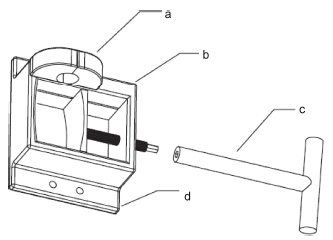
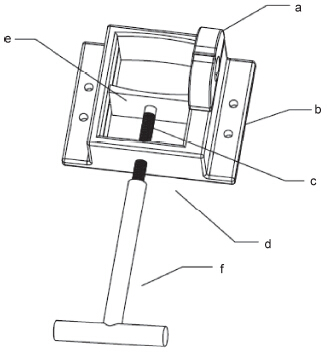
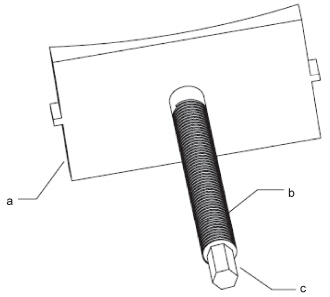
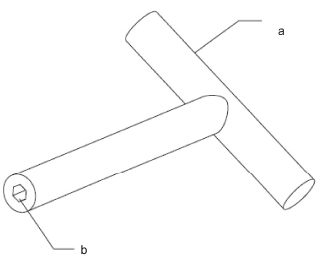
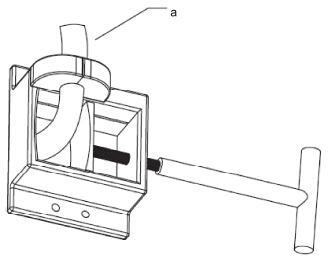
摘要 Objective: Drainage tubes (e.g., intracranial, abdominal cavity and thoracic) are commonly used to drain blood and fluid collections after surgery. It usually fails due to the lack of fixation perpendicular to the skin and the variety of tube materials. The objective of the article is to describe a new drainage tube device. Methods: This new device consists of a drainage tube fixator and diverter with a rotating handle. The fixator and diverter are fixed to the skin with a pair of wings, and the base comprises acircular arc with chamfering of the edge. The removable stopper and plastic diverter have a memory function. There are 2 holes on either side of the wings, by which they can be sewn to the skin or stapled for strength and stability. Results: The removable limiting stopper and plastic diverter with memory function work together to ensure that the drainage tube is firmly fixed. Therefore, the tube will not move either vertically or horizontally on the skin. Moreover, the device is fit for drainage tubes with different specifications and materials. Conclusions: The limiting stopper can be moved easily, which is conducive to local skin disinfection around the drainage tube. The device deserves clinical promotion.
服务
把本文推荐给朋友
加入引用管理器
E-mail Alert
RSS
作者相关文章
Chao He
Ming Zhao
Dong Yang
Tianya Wu
Leiyu Qiu
关键词:  drainage tube  device  a pair of fixed wings  the removable stopper  the plastic diverter with memory  function  rotating handle    
Abstract: Objective: Drainage tubes (e.g., intracranial, abdominal cavity and thoracic) are commonly used to drain blood and fluid collections after surgery. It usually fails due to the lack of fixation perpendicular to the skin and the variety of tube materials. The objective of the article is to describe a new drainage tube device. Methods: This new device consists of a drainage tube fixator and diverter with a rotating handle. The fixator and diverter are fixed to the skin with a pair of wings, and the base comprises acircular arc with chamfering of the edge. The removable stopper and plastic diverter have a memory function. There are 2 holes on either side of the wings, by which they can be sewn to the skin or stapled for strength and stability. Results: The removable limiting stopper and plastic diverter with memory function work together to ensure that the drainage tube is firmly fixed. Therefore, the tube will not move either vertically or horizontally on the skin. Moreover, the device is fit for drainage tubes with different specifications and materials. Conclusions: The limiting stopper can be moved easily, which is conducive to local skin disinfection around the drainage tube. The device deserves clinical promotion.
Key words:  drainage tube    device    a pair of fixed wings    the removable stopper    the plastic diverter with memory    function    rotating handle
收稿日期:  2015-12-30      修回日期:  2016-01-18           出版日期:  2016-03-31      发布日期:  2016-03-31      期的出版日期:  2016-03-31
通讯作者:  Chao He, E-mail: zj.hechao@163.com    E-mail:  zj.hechao@163.com
引用本文:    
Chao He, Ming Zhao, Dong Yang, Tianya Wu, Leiyu Qiu. A new drainage tube device[J]. 临床转化神经科学, 2016, 2(1): 71-73.
Chao He, Ming Zhao, Dong Yang, Tianya Wu, Leiyu Qiu. A new drainage tube device. Translational Neuroscience and Clinics, 2016, 2(1): 71-73.
链接本文:  
http://tnc.tsinghuajournals.com/CN/10.18679/CN11-6030/R.2016.004  或          http://tnc.tsinghuajournals.com/CN/Y2016/V2/I1/71
20160503095300  
20160503095312  
20160503095323  
20160503095333  
20160503095344  
[1] Srinivasan VM, O'Neill BR, Jho D, Whiting DM, Oh MY. The history of external ventricular drainage. J Neurosurg 2014, 120(1): 228-236.
[2] Sun CR, Du HG, Yin LC, He M, Tian Y, Li HY. Choice for the removal of bloody cerebrospinal fluid in postcoiling aneurysmal subarachnoid hemorrhage: External ventricular drainage or lumbar drainage? Turk Neurosurg 2014, 24(5): 737-744.
[3] De Andrade AF, Paiva WS, Neville IS, Noleto GS, Junior AA, Sandon LHD, Bor-Seng-Shu E, Amorim RL, Teixeira MJ. Monoblock external ventricular drainage system in the treatment of patients with acute hydrocephalus: A pilot study. Med Sci Monit 2014, 20: 227-232.
[4] Kirmani AR, Sarmast AH, Bhat AR. Role of external ventricular drainage in the management of intraventricular hemorrhage; its complications and management. Surg Neurol Int 2015, 6: 188.
[5] Wang X, Dong Y, Qi XQ, Li YM, Huang CG, Hou LJ. Clinical review: Efficacy of antimicrobial-impregnated catheters in external ventricular drainage—A systematic review and meta-analysis. Crit Care 2013, 17(4): 234.
[6] Wiegand J, Hickson L, Merz TM. Indicators of external ventricular drainage-related infections—A retrospective observational study. Acta Neurochir 2016, 158(3): 595-601.
[1] Wenbin Ding, Shaocheng Zhang, Zhuo Wang, Lin Chen, Chuansen Zhang, Ping Huang, Shunfa Liu, Laiqing Sun, Yuhai Ma, Jun Yang, Fei Huang, Chengjing Xue, Yanxue Zhong, Lei Yin, Yongtai Pan, Dajiang Wu. Using nerve segment insert grafting to reconstruct neural pathways of brain-derived paralysis[J]. 临床转化神经科学, 2017, 3(4): 188-195.
[2] Chao He, Nongnaphat Wanussakul, Dong Yang, Tianya Wu, Ming Zhao. A newly developed open-end intracranial hematoma drainage tube[J]. 临床转化神经科学, 2016, 2(2): 150-152.
[3] Cunli Xu, Wenhua Wu, Lingbin Kong. Effects of regional cerebral blood flow perfusion on learning and memory function and its molecular mechanism in rats[J]. 临床转化神经科学, 2016, 2(1): 17-24.
[1] Bangyong Keum, Yijun Liu. Analysis of 3-D Frictional Contact Mechanics Problems by a Boundary Element Method[J]. Tsinghua Science and Technology, 2005, 10(1): 16 -29 .
[2] Bangyong Keum, Yijun Liu. Analysis of 3-D Frictional Contact Mechanics Problems by a Boundary Element Method[J]. Tsinghua Science and Technology, 2005, 10(1): 16 -29 .
[3] Bangyong Keum, Yijun Liu. Analysis of 3-D Frictional Contact Mechanics Problems by a Boundary Element Method[J]. Tsinghua Science and Technology, 2005, 10(1): 16 -29 .
[4] Meng Junping,Dong Shoubin,Tang Liqun,Jiang Yi. A Hybrid Mathematical Model of Tumor-Induced Angiogenesis with Blood Perfusion[J]. Tsinghua Science and Technology, 2014, 19(6): 648 -657 .
[5] Meng Junping,Dong Shoubin,Tang Liqun,Jiang Yi. A Hybrid Mathematical Model of Tumor-Induced Angiogenesis with Blood Perfusion[J]. Tsinghua Science and Technology, 2014, 19(6): 648 -657 .
[6] Meng Junping,Dong Shoubin,Tang Liqun,Jiang Yi. A Hybrid Mathematical Model of Tumor-Induced Angiogenesis with Blood Perfusion[J]. Tsinghua Science and Technology, 2014, 19(6): 648 -657 .
[7] Jing Xi, Yuan Gao, Lijun Kong, Yandao Gong, Nanming Zhao, Xiufang Zhang. Behavior of MC3T3-E1 Osteoblast Cultured on Chitosan Modified with Polyvinylpyrrolidone[J]. Tsinghua Science and Technology, 2005, 10(4): 439 -444 .
[8] Jing Xi, Yuan Gao, Lijun Kong, Yandao Gong, Nanming Zhao, Xiufang Zhang. Behavior of MC3T3-E1 Osteoblast Cultured on Chitosan Modified with Polyvinylpyrrolidone[J]. Tsinghua Science and Technology, 2005, 10(4): 439 -444 .
[9] Jing Xi, Yuan Gao, Lijun Kong, Yandao Gong, Nanming Zhao, Xiufang Zhang. Behavior of MC3T3-E1 Osteoblast Cultured on Chitosan Modified with Polyvinylpyrrolidone[J]. Tsinghua Science and Technology, 2005, 10(4): 439 -444 .
[10] Kang Chen, Meiming Shen, Weimin Zheng. Resources Allocation Schemas for Web Information Monitoring[J]. Tsinghua Science and Technology, 2005, 10(3): 309 -315 .
Viewed
Full text


Abstract

Cited

  Shared   
  Discussed   
版权所有 © 《临床转化神经科学》编辑部


本系统由北京玛格泰克科技发展有限公司设计开发 技术支持:support@magtech.com.cn