Behavioral features of mice fed with a cholesterol-enriched diet:Deficient novelty exploration and unaltered aggressive behavior
Ekaterina Veniaminova1,2, Raymond Cespuglio3,4, Nataliia Markova1,2,5, Niall Mortimer6, Chi Wai Cheung7, Harry W. Steinbusch1, Klaus-Peter Lesch1,6, Tatyana Strekalova1
1 Department of Neuroscience, School for Mental Health and Neuroscience, Maastricht University, Universiteitssingel 40, Maastricht 6200 MD, the Netherlands;
2 Institute of General Pathology and Pathophysiology, Russian Academy of Medical Sciences, Baltiyskaya 8, Moscow 125315, Russia;
3 Faculty of Medicine, Neuroscience research Center of Lyon, C. Bernard University,8 Av. Rockefeller, Lyon 69373, France;
4 Department of Anatomy, Guangzhou Medical University, Guangzhou 511436, China;
5 Laboratory of Biomolecular Screening, Institute of Physiologically Active Compounds, Russian Academy of Sciences, Moscow Region, Russia;
6 Division of Molecular Psychiatry, Laboratory of Translational Neuroscience, Department of Psychiatry, Psychosomatics and Psychotherapy, University of Wuerzburg, Fuechsleinstrasse 15, Wuerzburg 97080, Germany;
7 Department of Anaesthesiology, the University of Hong Kong, Queen Mary Hospital, Hong Kong, China
Behavioral features of mice fed with a cholesterol-enriched diet:Deficient novelty exploration and unaltered aggressive behavior
Ekaterina Veniaminova1,2, Raymond Cespuglio3,4, Nataliia Markova1,2,5, Niall Mortimer6, Chi Wai Cheung7, Harry W. Steinbusch1, Klaus-Peter Lesch1,6, Tatyana Strekalova1
1 Department of Neuroscience, School for Mental Health and Neuroscience, Maastricht University, Universiteitssingel 40, Maastricht 6200 MD, the Netherlands;
2 Institute of General Pathology and Pathophysiology, Russian Academy of Medical Sciences, Baltiyskaya 8, Moscow 125315, Russia;
3 Faculty of Medicine, Neuroscience research Center of Lyon, C. Bernard University,8 Av. Rockefeller, Lyon 69373, France;
4 Department of Anatomy, Guangzhou Medical University, Guangzhou 511436, China;
5 Laboratory of Biomolecular Screening, Institute of Physiologically Active Compounds, Russian Academy of Sciences, Moscow Region, Russia;
6 Division of Molecular Psychiatry, Laboratory of Translational Neuroscience, Department of Psychiatry, Psychosomatics and Psychotherapy, University of Wuerzburg, Fuechsleinstrasse 15, Wuerzburg 97080, Germany;
7 Department of Anaesthesiology, the University of Hong Kong, Queen Mary Hospital, Hong Kong, China
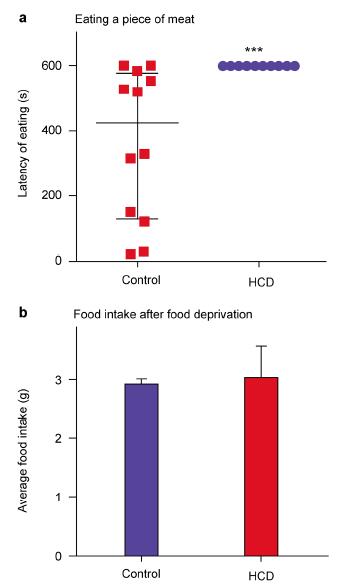
摘要 Objectives: Previous studies involving mice have demonstrated that a cholesterol-enriched diet evokes liver steatosis, dystrophy, inflammation, and aspects of non-alcoholic fatty liver disease (NAFLD). These changes are accompanied by the activation of pro-inflammatory brain and liver molecular pathways, as well as anxiety and depressive-like behaviors. Given previously reported evidence for the neurobiological relationship between the above-mentioned molecular changes and abnormalities in coping with environmental stimuli, such as interactions with other individuals and new environmental contexts, we hypothesized that novelty exploration and aggressive behavior are affected in a mouse NAFLD model. Methods: To test this hypothesis, young female C57BL/6J mice were fed with a regular chow or a diet containing 0.2% cholesterol for 3 weeks. The mice were then assessed for new object and novel cage exploration, and social interaction in a food competition test. Results: We found reduced object exploration in mice on the cholesterol-enriched diet. This reduction was not related to whether the new object was placed in an anxiogenic or non-anxiogenic environment. These changes were accompanied by diminished exploration of the new environment in a novel cage, and delayed approach to food after a period of food deprivation. Mice on the regular chow or cholesterol-enriched diet showed no differences in aggressive behavior towards a counter-partner in a food competition test. Food intake and body weight did not differ between the groups, thus, excluding their potential as confounders in the measured behaviors. Conclusions: We conclude that a diet enriched with cholesterol reduces novelty exploration irrespective of the anxiogenic level of the environment and does not induce aggressive behavior in female mice.
Abstract: Objectives: Previous studies involving mice have demonstrated that a cholesterol-enriched diet evokes liver steatosis, dystrophy, inflammation, and aspects of non-alcoholic fatty liver disease (NAFLD). These changes are accompanied by the activation of pro-inflammatory brain and liver molecular pathways, as well as anxiety and depressive-like behaviors. Given previously reported evidence for the neurobiological relationship between the above-mentioned molecular changes and abnormalities in coping with environmental stimuli, such as interactions with other individuals and new environmental contexts, we hypothesized that novelty exploration and aggressive behavior are affected in a mouse NAFLD model. Methods: To test this hypothesis, young female C57BL/6J mice were fed with a regular chow or a diet containing 0.2% cholesterol for 3 weeks. The mice were then assessed for new object and novel cage exploration, and social interaction in a food competition test. Results: We found reduced object exploration in mice on the cholesterol-enriched diet. This reduction was not related to whether the new object was placed in an anxiogenic or non-anxiogenic environment. These changes were accompanied by diminished exploration of the new environment in a novel cage, and delayed approach to food after a period of food deprivation. Mice on the regular chow or cholesterol-enriched diet showed no differences in aggressive behavior towards a counter-partner in a food competition test. Food intake and body weight did not differ between the groups, thus, excluding their potential as confounders in the measured behaviors. Conclusions: We conclude that a diet enriched with cholesterol reduces novelty exploration irrespective of the anxiogenic level of the environment and does not induce aggressive behavior in female mice.
Ekaterina Veniaminova, Raymond Cespuglio, Nataliia Markova, Niall Mortimer, Chi Wai Cheung, Harry W. Steinbusch, Klaus-Peter Lesch, Tatyana Strekalova. Behavioral features of mice fed with a cholesterol-enriched diet:Deficient novelty exploration and unaltered aggressive behavior[J]. 临床转化神经科学, 2016, 2(2): 87-95.
Ekaterina Veniaminova, Raymond Cespuglio, Nataliia Markova, Niall Mortimer, Chi Wai Cheung, Harry W. Steinbusch, Klaus-Peter Lesch, Tatyana Strekalova. Behavioral features of mice fed with a cholesterol-enriched diet:Deficient novelty exploration and unaltered aggressive behavior. Translational Neuroscience and Clinics, 2016, 2(2): 87-95.
[1] Pomytkin IA, Cline BH, Anthony DC, Steinbusch HW, Lesch KP, Strekalova T. Endotoxaemia resulting from decreased serotonin tranporter (5-HTT) function:A reciprocal risk factor for depression and insulin resistance? Behav Brain Res 2015, 276:111-117.
[2] Felger JC, Lotrich FE. Inflammatory cytokines in depression:Neurobiological mechanisms and therapeutic implications. Neuroscience 2013, 246:199-229.
[3] Sonawalla SB, Papakostas GI, Petersen TJ, Yeung AS, Smith MM, Sickinger AH, Gordon J, Israel J, Tedlow JA, Lamon-Fava S, et al. Elevated cholesterol levels associated with nonresponse to fluoxetine treatment in major depressive disorder. Psychosomatics 2002, 43(4):310-316.
[4] Golomb BA, Evans MA, White HL, Dimsdale JE. Trans fat consumption and aggression. PLoS One 2012, 7(3):e32175.
[5] Coccaro EF, Lee R, Coussons-Read M. Elevated plasma inflammatory markers in individuals with intermittent explosive disorder and correlation with aggression in humans. JAMA Psychiatry 2014, 71(2):158-165.
[6] Coccaro EF, Lee R, Coussons-Read M. Cerebrospinal fluid inflammatory cytokines and aggression in personality disordered subjects. Int J Neuropsychopharmacol 2015, 18(7):1-7.
[7] Hilakivi-Clarke L, Cho E, Onojafe I. High-fat diet induces aggressive behavior in male mice and rats. Life Sci 1996, 58(19):1653-1660.
[8] Raygada M, Cho E, Hilakivi-Clarke L. High maternal intake of polyunsaturated fatty acids during pregnancy in mice alters offsprings' aggressive behavior, immobility in the swim test, locomotor activity and brain protein kinase C activity. J Nutr 1998, 128(12):2505-2511.
[9] Kaplan JR, Manuck SB, Shively C. The effects of fat and cholesterol on social behavior in monkeys. Psychosom Med 1991, 53(6):634-642.
[10] Dolan M, Anderson IM, Deakin JFW. Relationship between 5-HT function and impulsivity and aggression in male offenders with personality disorders. Br J Psychiatry 2001, 178(4):352-359.
[11] Bousardt AMC, Hoogendoorn AW, Noorthoorn EO, Hummelen JW, Nijman HLI. Predicting inpatient aggression by self-reported impulsivity in forensic psychiatric patients. Crim Behav Ment Health, in press, DOI 10.1002/cbm.1955.
[12] Coccaro EF, Lee R, McCloskey MS. Relationship between psychopathy, aggression, anger, impulsivity, and intermittent explosive disorder. Aggress Behav 2014, 40(6):526-536.
[13] King S, Waschbusch DA. Aggression in children with attention-deficit/hyperactivity disorder. Expert Rev Neurother 2010, 10(10):1581-1594.
[14] Murray-Close D, Crick NR, Tseng WL, Lafko N, Burrows C, Pitula C, Ralston P. Physiological stress reactivity and physical and relational aggression:The moderating roles of victimization, type of stressor, and child gender. Dev Psychopathol 2014, 26(3):589-603.
[15] Kruk MR, Halász J, Meelis W, Haller J. Fast positive feedback between the adrenocortical stress response and a brain mechanism involved in aggressive behavior. Behav Neurosci 2004, 118(5):1062-1070.
[16] Ballester J, Goldstein T, Goldstein B, Obreja M, Axelson D, Monk K, Hickey M, Iyengar S, Farchione T, Kupfer DJ, et al. Is bipolar disorder specifically associated with aggression? Bipolar Disord 2012, 14(3):283-290.
[17] Corrigan PW, Watson AC. Findings from the National Comorbidity Survey on the frequency of violent behavior in individuals with psychiatric disorders. Psychiatry Res 2005, 136(2-3):153-162.
[18] Faedda GL, Serra G, Marangoni C, Salvatore P, Sani G, Vázquez GH, Tondo L, Girardi P, Baldessarini RJ, Koukopoulos A. Clinical risk factors for bipolar disorders:A systematic review of prospective studies. J Affect Disord 2014, 168:314-321.
[19] Feldmann TB. Bipolar disorder and violence. Psychiatr Q 2001, 72(2):119-129.
[20] Harford TC, Yi HY, Grant BF. Other-and self-directed forms of violence and their relationships to DSM-IV substance use and other psychiatric disorders in a national survey of adults. Compr Psychiatry 2013, 54(7):731-739.
[21] Oquendo MA, Waternaux C, Brodsky B, Parsons B, Haas GL, Malone KM, Mann JJ. Suicidal behavior in bipolar mood disorder:Clinical characteristics of attempters and nonattempters. J Affect Disord 2000, 59(2):107-117.
[22] Strekalova T, Spanagel R, Bartsch D, Henn FA, Gass P. Stress-induced anhedonia in mice is associated with deficits in forced swimming and exploration. Neuropsychopharmacology 2004, 29(11):2007-2017.
[23] Costa-Nunes J, Zubareva O, Araújo-Correia M, Valença A, Schroeter CA, Pawluski JL, Vignisse J, Steinbusch H, Hermes D, Phillipines M, et al. Altered emotionality, hippocampus-dependent performance and expression of NMDA receptor subunit mRNAs in chronically stressed mice. Stress 2014, 17(1):108-116.
[24] Clinton SM, Miller S, Watson SJ, Akil H. Prenatal stress does not alter innate novelty-seeking behavioral traits, but differentially affects individual differences in neuroendocrine stress responsivity. Psychoneuroendocrinology 2008, 33(2):162-177.
[25] Flagel SB, Robinson TE, Clark JJ, Clinton SM, Watson SJ, Seeman P, Phillips PEM, Akil H. An animal model of genetic vulnerability to behavioral disinhibition and responsiveness to reward-related cues:Implications for addiction. Neuropsychopharmacology 2010, 35(2):388-400.
[26] Kabbaj M, Devine DP, Savage VR, Akil H. Neurobiological correlates of individual differences in novelty-seeking behavior in the rat:Differential expression of stress-related molecules. J Neurosci 2000, 20(18):6983-6988.
[27] Perez JA, Clinton SM, Turner CA, Watson SJ, Akil H. A new role for FGF2 as an endogenous inhibitor of anxiety. J Neurosci 2009, 29(19):6379-6387.
[28] White DA, Kalinichev M, Holtzman SG. Locomotor response to novelty as a predictor of reactivity to aversive stimuli in the rat. Brain Res 2007, 1149:141-148.
[29] Stedenfeld KA, Clinton SM, Kerman IA, Akil H, Watson SJ, Sved AF. Novelty-seeking behavior predicts vulnerability in a rodent model of depression. Physiol Behav 2011, 103(2):210-216.
[30] García-Fuster MJ, Parks GS, Clinton SM, Watson SJ, Akil H, Civelli O. The melanin-concentrating hormone (MCH) system in an animal model of depression-like behavior. Eur Neuropsychopharmacol 2012, 22(8):607-613.
[31] Atlantis E, Baker M. Obesity effects on depression:Systematic review of epidemiological studies. Int J Obes 2008, 32:881-891.
[32] De Wit L, Luppino F, Van Straten A, Penninx B, Zitman F, Cuijpers P. Depression and obesity:A meta-analysis of community-based studies. Psychiatry Res 2010, 178(2):230-235.
[33] Luppino FS, de Wit LM, Bouvy PF, Stijnen T, Cuijpers P, Penninx BWJH, Zitman FG. Overweight, obesity, and depression:A systematic review and meta-analysis of longitudinal studies. Arch Gen Psychiatry 2010, 67(3):220-229.
[34] Pan A, Sun Q, Czernichow S, Kivimaki M, Okereke OI, Lucas M, Manson JE, Ascherio A, Hu FB. Bidirectional association between depression and obesity in middle-aged and older women. Int J Obes 2012, 36(4):595-602.
[35] Ghanim H, Abuaysheh S, Sia CL, Korzeniewski K, Chaudhuri A, Fernandez-Real JM, Dandona P. Increase in plasma endotoxin concentrations and the expression of toll-like receptors and suppressor of cytokine signaling-3 in mononuclear cells after a high-fat, high-carbohydrate meal implications for insulin resistance. Diabetes Care 2009, 32(12):2281-2287.
[36] Strekalova T, Evans M, Costa-Nunes J, Bachurin S, Yeritsyan N, Couch Y, Steinbusch HMW, Köhlerf SE, Lesch KP, Anthony DC. Tlr4 upregulation in the brain accompanies depression-and anxiety-like behaviors induced by a high-cholesterol diet. Brain Behav Immun 2015, 48:42-47.
[37] Harrison NA, Cercignani M, Voon V, Critchley HD. Effects of inflammation on hippocampus and substantia nigra responses to novelty in healthy human participants. Neuropsychopharmacology 2015, 40(4):831-838.
[38] Kusnecov AW, Liang RM, Shurin G. T-lymphocyte activation increases hypothalamic and amygdaloid expression of CRH mRNA and emotional reactivity to novelty. J Neurosci 1999, 19(11):4533-4543.
[39] Haba R, Shintani N, Onaka Y, Wang H, Takenaga R, Hayata A, Baba A, Hashimoto H. Lipopolysaccharide affects exploratory behaviors toward novel objects by impairing cognition and/or motivation in mice:Possible role of activation of the central amygdala. Behav Brain Res 2012, 228(2):423-431.
[40] Iribarren C, Markovitz JH, Jacobs DR Jr, Schreiner PJ, Daviglus M, Hibbeln JR. Dietary intake of n-3, n-6 fatty acids and fish:Relationship with hostility in young adults-the CARDIA study. Eur J Clin Nutr 2004, 58(1):24-31.
[41] Comhair TM, Garcia Caraballo SC, Dejong CHC, Lamers WH, Köhler SE. Dietary cholesterol, female gender and n-3 fatty acid deficiency are more important factors in the development of non-alcoholic fatty liver disease than the saturation index of the fat. Nutr Metab (Lond) 2011, 8:4.
[42] Strekalova T, Costa-Nunes JP, Veniaminova E, Kubatiev A, Lesch KP, Chekhonin VP, Evans MC, Steinbusch HW. Insulin receptor sensitizer, dicholine succinate, prevents both Toll-like receptor 4(TLR4) upregulation and affective changes induced by a high-cholesterol diet in mice. J Affect Disord 2016, 196:109-116.
[43] Costa-Nunes JP, Cline BH, Araújo-Correia M, Valença A, Markova N, Dolgov O, Kubatiev A, Yeritsyan N, Steinbusch HWM, Strekalova T. Animal models of depression and drug delivery with food as an effective dosing method:Evidences from studies with celecoxib and dicholine succinate. BioMed Res Int 2015, 2015:Article ID 596126.
[44] Markova N, Chernopiatko A, Schroeter CA, Malin D, Kubatiev A, Bachurin S, Costa-Nunes J, Steinbusch HMW, Strekalova T. Hippocampal gene expression of deiodinases 2 and 3 and effects of 3, 5-diiodo-L-thyronine T2 in mouse depression paradigms. BioMed Res Int 2013, Article ID 565218.
[45] Hahn ME. Genetic "artifacts" an aggressive behavior. In Aggressive behavior:Genetic and neural approaches. Simmel EC, Hahn ME, Waiters JK, Eds. Hillsdale, NJ:Lawrence Erlbaum Associates, 1983.
[46] Ieni JR, Thurmond JB. Maternal aggression in mice:Effects of treatments with PCPA, 5-HTP and 5-HT receptor antagonists. Eur J Pharmacol 1985, 111(2):211-220.
[47] Olivier B, Mos J, Rasmussen D. Behavioural pharmacology of the serenic, eltoprazine. Drug Metabol Drug Interact 1990, 8(1-2):31-83.
[48] Veenema AH, Bredewold R, Neumann ID. Opposite effects of maternal separation on intermale and maternal aggression in C57BL/6 mice:Link to hypothalamic vasopressin and oxytocin immunoreactivity. Psychoneuroendocrinology 2007, 32(5):437-450.
 2016, Vol. 2